
Chapter 1
Understanding Your Diagnosis
|
CHAPTER 1
Understand Your Diagnosis |
New to this diagnosis? Start with Chapters 1 through 3. Already deep in treatment and looking for more options? Jump straight to Chapters 4 through 7. If you have not yet read the Data G Elevated PSA Freebie, it is a free companion guide covering PSA basics, mpMRI, and what to ask before a biopsy, available at healsmarter.com
However you found this guide, welcome.
Where and What is the Prostate?
The prostate is a walnut-sized gland that makes part of the fluid that becomes semen, the fluid that nourishes and helps carry sperm. This makes the prostate valuable mainly for fertility and reproduction.


Once a man is done having children, biologically speaking, the gland is not doing much else for the body, though it stays active producing that fluid throughout life.
It also sits close to the nerves that control erections and the muscle that controls urination, so while its own job is simple, its location makes it an important gland to understand.
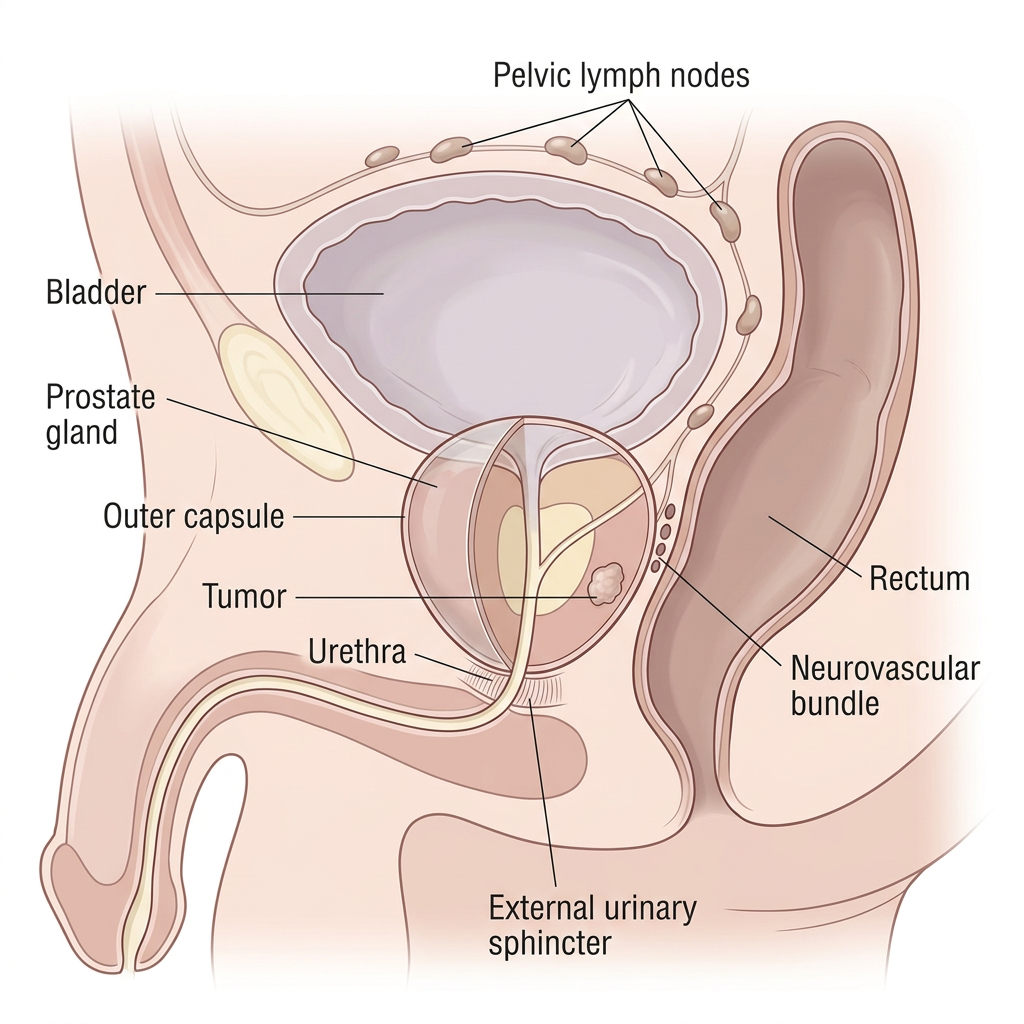
It sits below the bladder, in front of the rectum, and right next to the nerves that control erections. It surrounds the urethra (the tube urine passes through), and lies just above the external urinary sphincter (the muscle that keeps you continent).
This is exactly why treatment decisions are so personal to your body.
- Prostate Gland: The walnut-sized gland itself, sitting directly below the bladder and wrapped completely around the urethra. A tough outer layer called the capsule normally keeps cancer cells contained inside it. Your risk group is really a measure of how likely cells are to have broken through that capsule.
- Bladder: Sits directly above the prostate and stores urine until you are ready to release it. The neck of the bladder connects straight into the top of the prostate, which is part of why bladder and prostate issues are so closely linked.
- Urethra: The tube that carries urine, and semen, out of the body. It runs straight through the center of the prostate on its way down from the bladder, which is exactly why any treatment that disturbs the prostate can also affect urination.
- External Urinary Sphincter: The muscle just below the prostate that you consciously squeeze to stop the flow of urine. It is what keeps you continent, and it sits close enough to the prostate that surgery or radiation can affect it. This is why incontinence is a real risk worth understanding before you choose a treatment and why it is so important to protect this structure when treating the prostate.
- Neurovascular Bundle: The bundle of nerves and blood vessels that control erections. It runs along the outside of the prostate capsule, tucked into the narrow space between the prostate and the rectum. Whether a treatment spares or damages this bundle makes a big difference for preservation of erectile function afterward.
- Rectum: Sits directly behind the prostate, separated by only a thin layer of tissue. That closeness is why radiation can sometimes cause rectal irritation or bleeding, and why surgeons have to work so carefully in such a tight space.
What Is Prostate Cancer?
Prostate cancer starts in the cells of the prostate. Most prostate cancers grow slowly, but some grow fast and need quick action. The job of every Data G is to know which one you have.
The most common type is called adenocarcinoma, which grows from the glandular cells inside the prostate. More than 95 percent of prostate cancers are this type. There are much rarer types like small cell carcinoma, neuroendocrine carcinoma, and ductal carcinoma, which behave differently and need a different game plan.
Prostate cancer is the most common cancer in men in the United States after skin cancer. When it is caught early and the data is read well, outcomes are excellent. When it spreads outside the prostate, the picture changes. That is why early data, smart monitoring, and personalized treatment matter so much.
Why is the capsule so important?
Most low-risk cancer never breaks through the capsule. When it does, cells can escape a few different ways: growing directly through the capsule wall, traveling along the tiny nerve channels that enter the gland, or slipping into nearby lymph vessels.
If cells do escape, there is a fairly predictable path. First they move into the tissue just outside the prostate. From there, they can travel to the pelvic lymph nodes nearby. If they are not caught there, they can eventually enter the bloodstream and settle in bone, the most common site for prostate cancer to spread.
Knowing this path is exactly why your risk group, your mpMRI, and your PSA trend all matter so much. They are trying to tell you how far along this path the cells might already be.
Key Subtypes
- Acinar adenocarcinoma: The most common type. Starts in the gland cells of the prostate.
- Ductal adenocarcinoma: Rarer and more aggressive than acinar. Often higher Gleason grade. Worth knowing if this is the pathology.
- Neuroendocrine and small cell carcinoma: Rare and aggressive. Often do not make PSA. Need a different treatment strategy. Can develop as a resistance mechanism after long-term hormone therapy.
- Intraductal carcinoma: A high-risk feature on biopsy sometimes linked to BRCA2 mutations and often represent more aggressive disease. Ask if this was noted on pathology.
Key Classifications
- Gleason score and Grade Group: The biopsy is graded from Gleason 6 (Grade Group 1, least aggressive) to Gleason 10 (Grade Group 5, most aggressive). This is one of the most important numbers you have. It classifies risk and helps understand the urgency required.
- Stage I to II: Cancer is inside the prostate.
- Stage III: Cancer has grown outside the prostate or into nearby tissue like the seminal vesicles.
- Stage IV: Cancer has spread to lymph nodes, bones, or distant organs. If lymph nodes are involved, there are different schools of thought on if the disease can be eradicated with local therapy alone. Bone is the most common distant metastatic site.
This guide was written for Stages 1-3. If you have Stage 4 Prostate Cancer, you have purchased the wrong guide and need our Metastatic Prostate Guide Instead.
The Most Important Data Points for Prostate Cancer
|
|
Is the disease confined to the prostate or not? All of the tools discussed are aimed at predicting a very specific statistical likelihood of whether or not disease is confined inside the capsule (and therefore can be treated locally). |
The Numbers You Need to Understand
There are few situations in which a single PSA number that definitively mean cancer. Context always matters. Here are the metrics that give you real information.
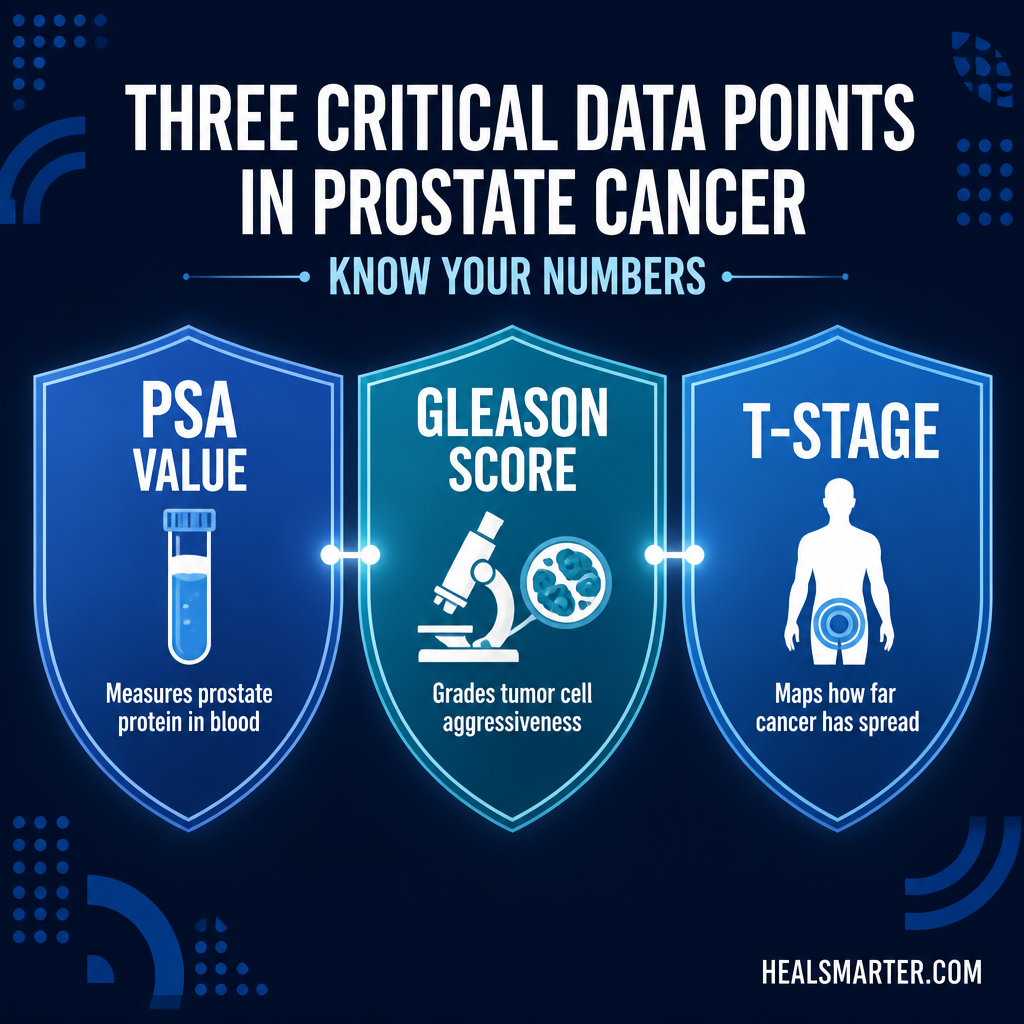
- PSA Value
- Gleason Score
- T Stage
- PSA Value
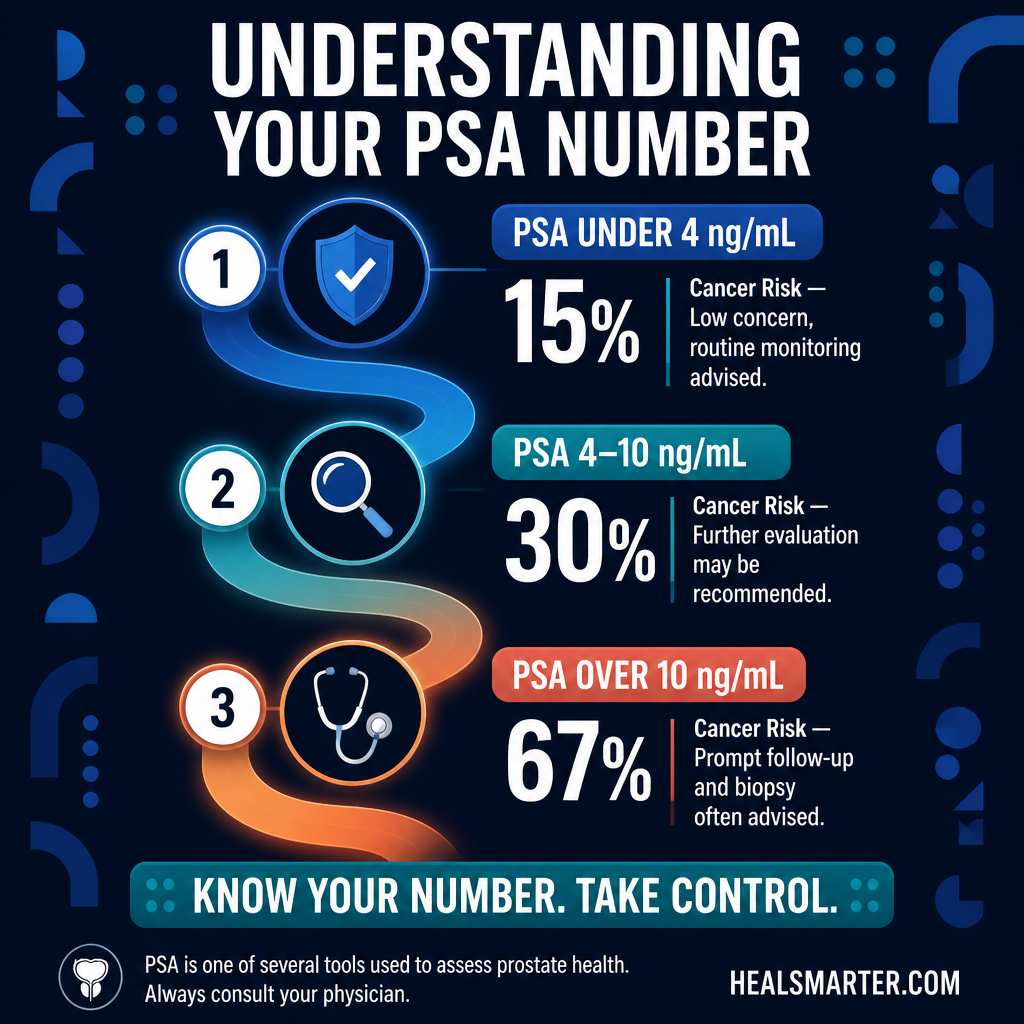
Population guidelines put general ranges at 2.5 to 4.0 ng/mL depending on age, but these are averages built from large groups. Your number needs to be read in the context of your age, your prostate size, and your family history.
One number alone tells a limited story. A PSA of 5 in a 70-year-old with a large prostate may be less concerning than a PSA of 3 in a 45-year-old with a small gland. Context is everything.
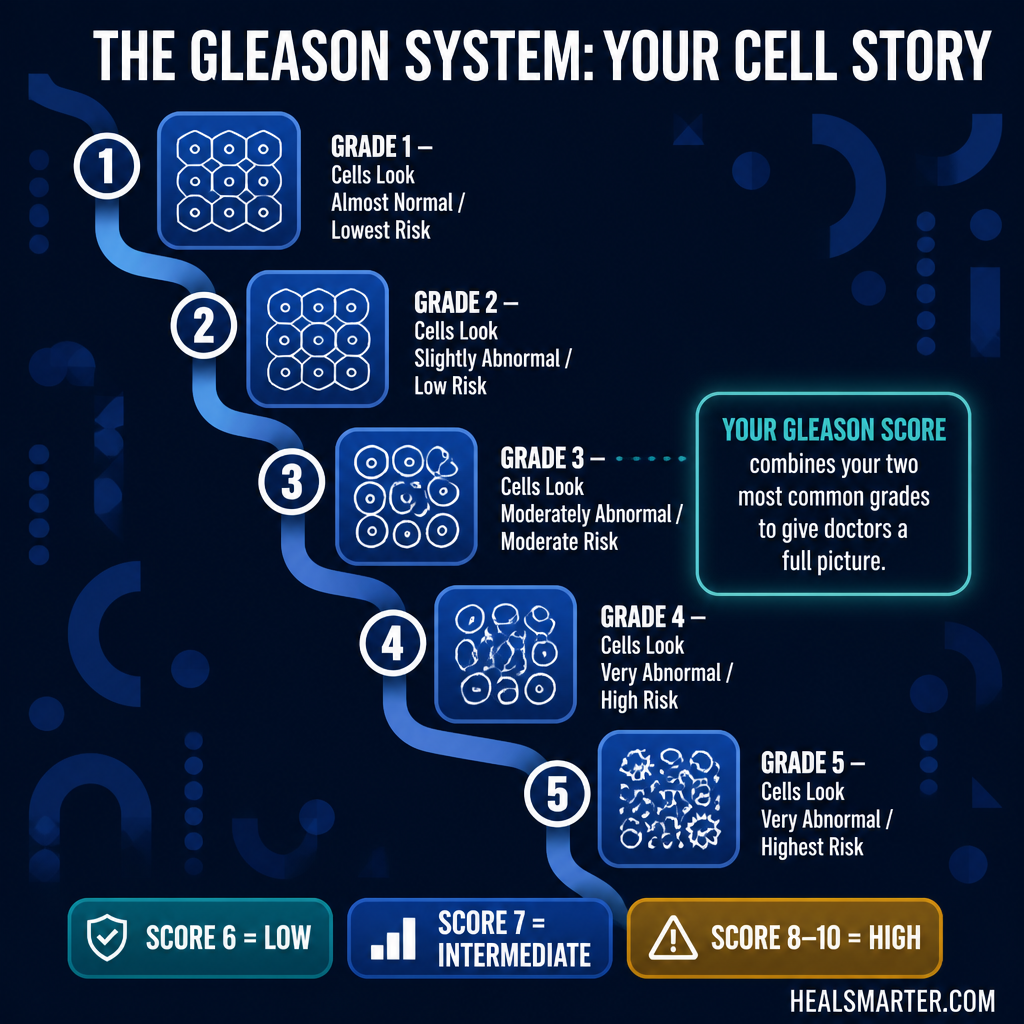
Gleason Score –
A grading system that describes how normal or abnormal the cells from your biopsy look under a microscope. Cells that look almost normal get a low score. Cells that look very abnormal get a high score. This is one of the most important numbers in this whole journey, and it drives nearly every conversation that follows a positive biopsy.
T Stage 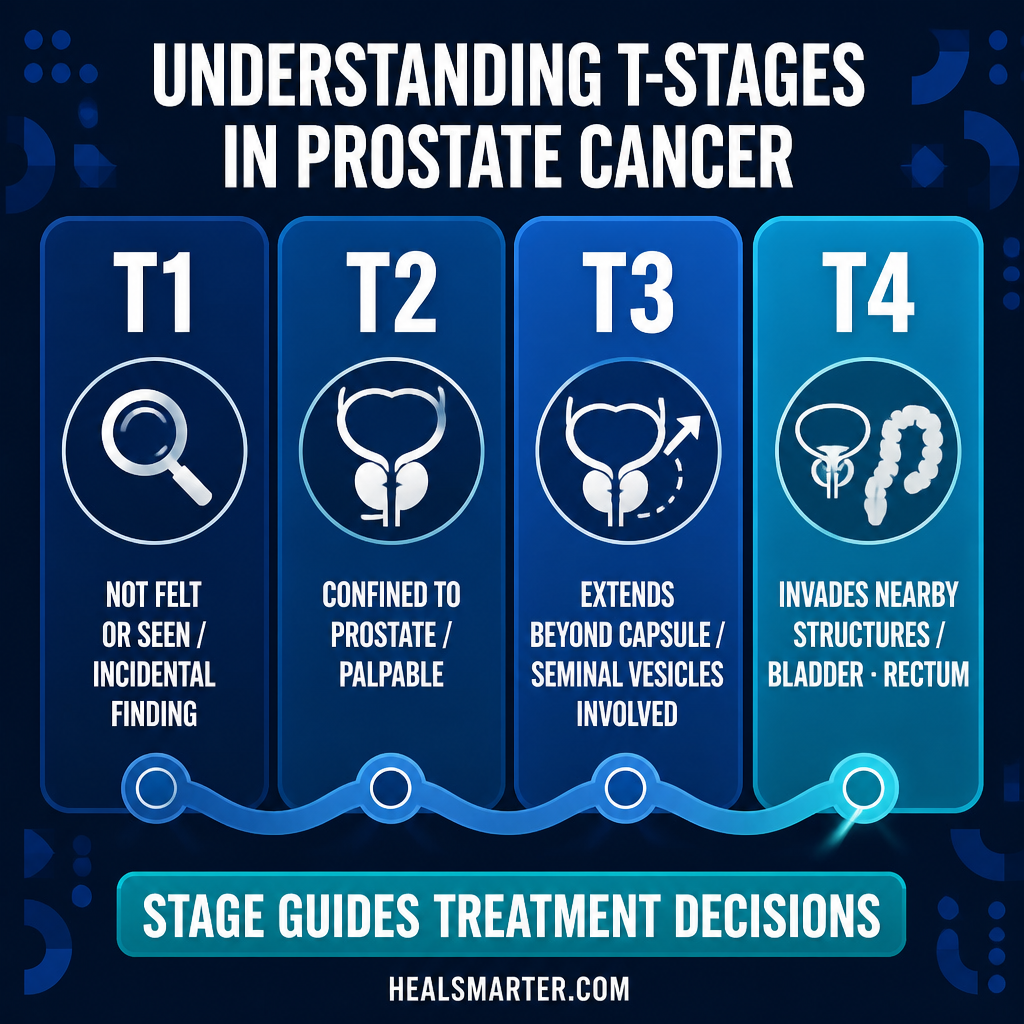
Describes whether an abnormality can be felt by your doctor during a digital rectal exam, and if so, how much of the gland it seems to involve.
Along with your PSA and Gleason score, this is one of the three numbers used to estimate whether the disease is still contained inside the prostate.
PSA Velocity (PSAV): The Speed of Change
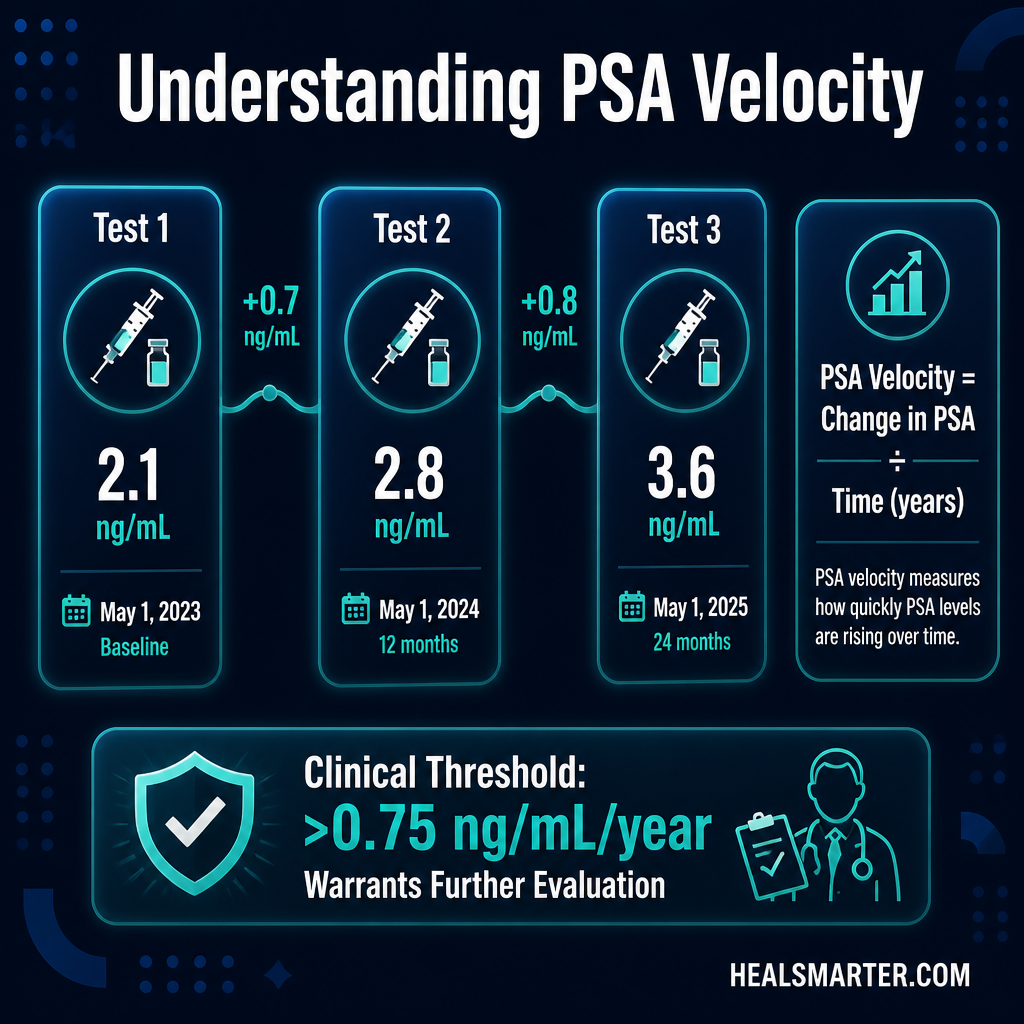
PSA velocity is how quickly your PSA is rising over time.
A PSA that moves from 2 to 4 to 8 in two years tells a very different story than one that moved from 3.5 to 4.0 over five years.
If you only have one PSA number, that may be a problem. You need a trend. Ask your doctor what your previous readings were.
Ask your doctor: What was my PSA one year ago? Two years ago? Five years ago? If they do not have that data, request your records. Your trend is your most valuable data point.
PSA Doubling Time
PSA doubling time is how long it takes for your PSA to double. A slow doubling time measured in years suggests a less urgent process. A rapid doubling time measured in months warrants more attention. Free online calculators let you input your own numbers.
Free PSA vs. Total PSA Ratio
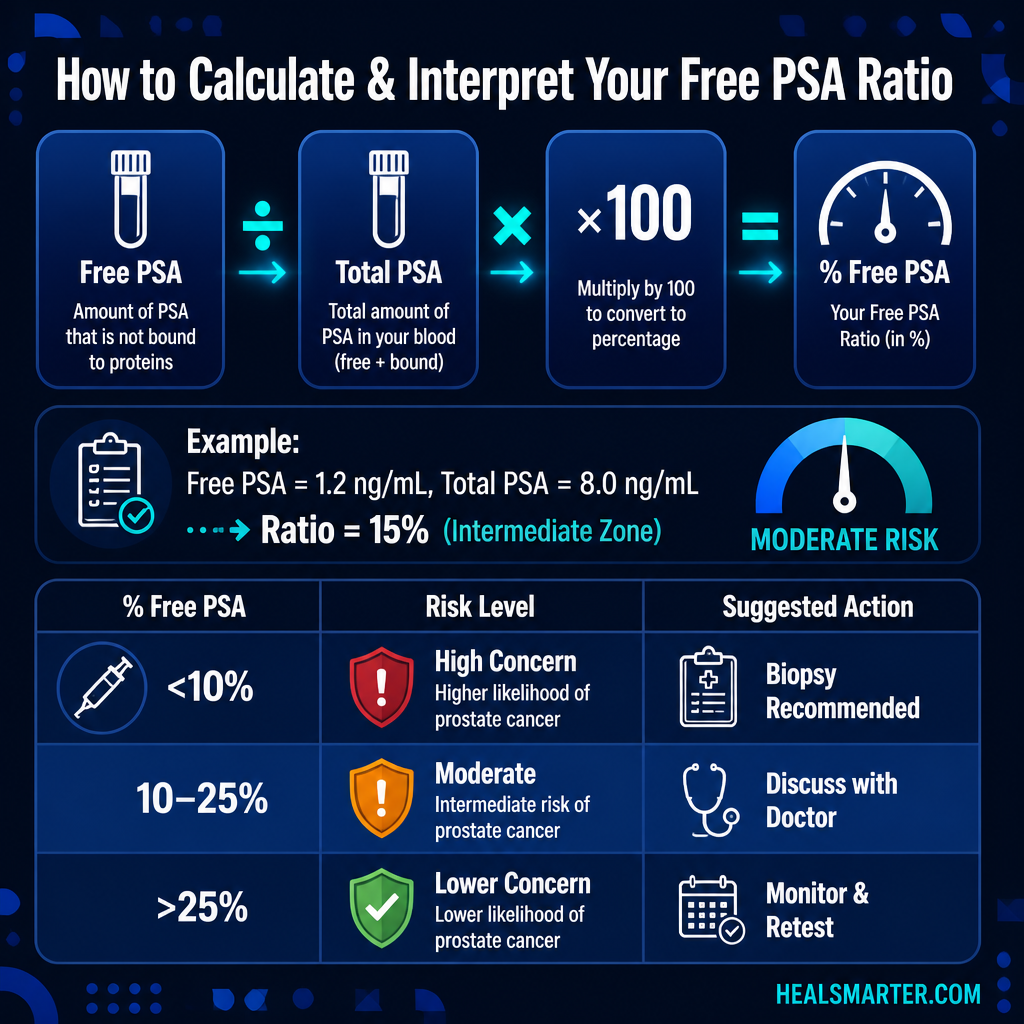
PSA exists in two forms in the blood. Free PSA is not bound to proteins. A lower percentage of free PSA relative to total PSA tends to be linked to a higher likelihood of cancer being present. A higher percentage suggests a benign cause like an enlarged prostate. Free PSA value is historically most useful for patients whose PSA is 4-10.
Ask your doctor: Can we add a free PSA to total PSA ratio to my next blood draw? It is a simple add-on to the same sample that gives you meaningfully more information.
PSA Density (PSAD)
Your PSA value divided by the size, or volume, of your prostate, usually measured on an MRI or ultrasound. A larger prostate naturally makes more PSA, so density adjusts for that. A high density suggests the elevated number is less likely to simply be a big gland, and more worth a closer look.
Ask your doctor: Can we calculate my PSA density using my MRI prostate volume? It is usually just a quick calculation once both numbers exist.
proPSA (p2PSA) –
A more prostate cancer specific fragment of free PSA. On its own it adds useful detail, and it is also one of three numbers combined into a single score called the Prostate Health Index (PHI), along with total PSA and free PSA. PHI is FDA-cleared and, like the 4Kscore, is an optional tool some men use to get an extra data point before deciding on a biopsy.
Testosterone Value –
Testosterone matters too. Prostate cells are fueled by testosterone, so it is part of the same story as PSA. Think of it this way: PSA is what the prostate produces, and testosterone is what powers it to keep producing. Knowing your baseline testosterone helps your team read your PSA in context, and it becomes essential later if hormone therapy is ever part of your plan.
mpMRI (multiparametric MRI): Now Category 1 evidence as the standard of care before biopsy per NCCN guidelines. It helps target the biopsy and reduces unnecessary procedures.
PSMA expression: Most prostate cancers express PSMA on their cell surface. This drives both PSMA PET imaging and PSMA-targeted radioligand therapy eligibility. (only for intermediate or high risk cancer, not required if PSA is less than 10)
|
|
A diagnosis is data. It tells you where you are starting. It does not tell you where you will finish. You are a Data G, and Data G’s use every piece of information to move forward making an informed decision. |
|
|
PATIENT-TO-PATIENT WARNING: With Prostate Cancer especially, it is important to understand all of the risks associated with treatment before deciding on a path forward. What may be the fastest solution to removing cancer may create the harshest long-term issues. DO NOT ACT QUICKLY IN FEAR. Real talk: With low or medium risk, often times the most dangerous thing you can do is rush to cut it out or destroy the gland, both of which can cause collateral damage to the surrounding tissue and anatomy.
When I was diagnosed, all I wanted was for the cancer to be out of my body, but don’t let fear bully you into making a fast decision. You also want to enjoy your life and do everything possible to avoid living in a diaper. Surgery or radiation can create unnecessary risk when it comes to impotence and incontinence. This is wildly important to openly discuss before making a decision. |