
Heal Smarter | Colon Cancer
Colon Cancer Survival: Understanding the Numbers and What They Mean
Most people arrive at this question within hours of a diagnosis, wanting one number that settles things. Survival statistics cannot do that. They describe what happened to large groups of people diagnosed years ago, grouped by how far the cancer had spread — and the range between those groups is wide. This page explains what the published figures measure, what they leave out, and which details about your own diagnosis actually shape the conversation with your oncology team.
Key takeaways
- Survival statistics for colon cancer are usually reported by extent of disease at diagnosis — localized, regional, or distant — because that grouping separates outcomes more than any other single factor.
- The most widely cited figures come from the National Cancer Institute's SEER program and report colorectal cancer, meaning colon and rectal cancer counted together.
- 5-year relative survival compares people with the cancer to similar people without it. It is not a life expectancy and it does not mean survival stops at five years.
- Published rates always describe the past. Diagnoses from 2016–2022 reflect the testing and treatment available then.
- No population statistic can predict an individual outcome. Tumor biology, molecular testing results, treatment response, and overall health all belong in that discussion with a clinician.
On this page
- 01 What is the survival rate?
- 02 What 5-year relative survival means
- 03 Survival by extent of disease
- 04 Stage IV colon cancer
- 05 What can affect outlook
- 06 Julie Stevens' perspective
- 07 Questions for your oncology team
- 08 Survivorship
- 09 The Heal Smarter Guide
- 10 Frequently asked questions
- 11 Sources & further reading
What Is the Survival Rate for Colon Cancer?
For colorectal cancer overall, the National Cancer Institute's SEER program reports 5-year relative survival of 91.3% for localized disease, 75.2% for regional disease, and 16.9% for distant disease, based on people diagnosed between 2016 and 2022. The spread between those three numbers is the real answer to the question: how far the cancer had travelled when it was found matters more than almost anything else that gets reported at a population level.
Source: NCI SEER Cancer Stat Facts: Colorectal Cancer · SEER 21 (excluding Illinois), diagnoses 2016–2022
Two cautions before you read the table. First, SEER publishes these stage-specific figures for colorectal cancer — colon and rectum combined — so they are labelled that way here rather than presented as colon-only numbers. Second, survival statistics describe populations. Modern treatment, molecular testing, and the specific biology of one tumor can place an individual well away from a historic average in either direction.
| Extent of disease at diagnosis | What it means | 5-year relative survival | Share of diagnoses |
|---|---|---|---|
| Localized | Confined to the primary site, with no sign of spread beyond the bowel wall. | 91.3% | 34% of diagnoses |
| Regional | Spread to nearby structures or regional lymph nodes. | 75.2% | 37% of diagnoses |
| Distant | Cancer has metastasized to distant organs or distant lymph nodes. | 16.9% | 23% of diagnoses |
| Unstaged | Records where extent of disease was not determined. | 49.7% | 6% of diagnoses |
| All stages combined | Secondary context only — it blends four very different groups into one number. | 65.4% | 100% |
What this measures: The percentage of people diagnosed with colorectal cancer who were alive five years later, compared with people of similar age and sex in the general population. Deaths from unrelated causes are excluded.
Source:National Cancer Institute, SEER Cancer Stat Facts: Colorectal Cancer · Data period: SEER 21 (excluding Illinois), diagnoses 2016–2022, all races, both sexes
Labelling note: SEER reports colon and rectal cancer together as colorectal cancer. These are not colon-only figures. Colon-specific survival can be filtered in SEER*Explorer.
These are population averages. They describe groups of people, not any one person, and they cannot predict an individual outcome.
What Does “5-Year Relative Survival” Mean?
It is a comparison, not a countdown. Relative survival takes everyone diagnosed with a particular cancer and compares how many were alive after a set period with how many people of the same age and sex in the general population were alive over the same period. Expressing it as a ratio strips out deaths from causes unrelated to the cancer, which is what makes the number a usable estimate of the cancer's effect rather than a general mortality figure.
Relative survival
A ratio: survival in the diagnosed group divided by expected survival in a comparable group from the general population. A figure of 75% means the diagnosed group was about three-quarters as likely to be alive at that point.
Why five years
Five years is a reporting convention, chosen because it is long enough to be meaningful and short enough to publish while the data are still current. It is not a medical milestone at which a cancer becomes a different disease.
Does it mean five years of life?
No. It says nothing about what happens in year six or year twenty. Many people counted in a 5-year statistic went on living for decades; the measurement simply stopped counting at the five-year mark.
Why it can't predict you
The figure is an average across thousands of people with different tumor biology, different molecular test results, different treatment responses, and different health histories. An average has no way of describing one person inside it.
Colon Cancer Survival by Extent of Disease
SEER uses three summary groupings — localized, regional, and distant — which map loosely, but not exactly, onto the Stage I to Stage IV system a clinician uses. Clinical staging also incorporates how deeply the tumor has grown through the bowel wall, how many lymph nodes are involved, and findings from imaging and pathology. If the grouping used in a statistic and the stage on a pathology report seem to disagree, that is usually why.
Localized colon cancer
Localized means there is no evidence the cancer has spread beyond the colon itself. Cancers found at this point are frequently found before symptoms appear, often through screening. Treatment discussions typically centre on removing the tumor and on whether anything further is warranted based on what pathology shows afterwards. About 34% of colorectal cancers are diagnosed while still localized, and 5-year relative survival for that group is 91.3%.
Source: NCI SEER Cancer Stat Facts: Colorectal Cancer · Diagnoses 2016–2022
Regional colon cancer
Regional disease has extended into nearby tissue or into regional lymph nodes, but not to distant organs. Lymph node involvement is one of the more significant findings on a pathology report because it changes what the treatment conversation covers. SEER reports 5-year relative survival of 75.2% for regional colorectal cancer, the group that accounts for the largest share of diagnoses at 37%.
Distant / metastatic colon cancer
Distant disease means cancer has been found in organs away from the colon — the liver and lungs most commonly — or in distant lymph nodes. SEER reports 5-year relative survival of 16.9% here. This group is also the most internally varied of the three: it includes people with a single, potentially treatable metastasis and people with extensive spread, and one average is being asked to cover both.
What About Stage IV Colon Cancer Survival?
Stage IV generally corresponds to distant disease: cancer that has spread beyond the colon and its regional lymph nodes. The SEER figure for that group — 16.9% 5-year relative survival for distant colorectal cancer — is the number most often quoted, and it is the number most often misread, because it flattens a genuinely wide range of clinical situations into a single average.
Several things influence where inside that range a particular situation sits:
- Where the cancer has spread and how much. Limited spread to a single organ is a different clinical conversation from widespread disease.
- Whether local treatment of metastases is possible. In some cases, surgery or other local therapy directed at metastatic sites becomes part of the discussion.
- Molecular and biomarker findings. Testing can identify features of a tumor that inform which systemic treatment options a team will discuss.
- Response to treatment. How the disease behaves over the first months of treatment is information no baseline statistic contains.
None of these are guarantees, and none of them can be converted into a personal percentage. They are the details worth asking about, because they are what a clinician is actually weighing when a patient asks what the statistics mean for them.
Planned resource. This link points to /stage-4-colon-cancer-survival/ and is the single place to update once that page is published. This overview intentionally does not attempt to answer the full Stage IV search intent.
What Can Affect Colon Cancer Outlook?
These are factors clinicians consider when discussing outlook. Each one is a piece of context, not a cause with a predictable effect, and they interact with each other in ways that only a team with the full clinical picture can weigh.
Extent of disease
Whether the cancer is confined to the colon, involves regional nodes, or has spread to distant organs — the grouping that separates published survival figures most sharply.
Where it has spread
The sites and number of metastases shape which treatment approaches are even on the table for discussion.
Tumor biology
How the tumor looks under a microscope, including grade and features noted on the pathology report.
Biomarkers and molecular testing
Molecular characteristics identified through testing can inform which systemic therapies an oncology team considers appropriate to discuss.
Overall health
Other medical conditions and general physical condition affect which treatments can be tolerated and at what intensity.
Treatment response
How the cancer behaves during treatment provides information that no statistic gathered at diagnosis contains.
Local treatment options
In selected situations, surgery or other locally directed treatment of metastatic sites may become part of the conversation.
Changes over time
Testing and treatment options continue to evolve, so a figure describing diagnoses from several years ago reflects that era's care.
Beyond the Statistics: Julie Stevens' Perspective

Julie Stevens founded Heal Smarter after being diagnosed with Stage 4 colon cancer. On the day she was diagnosed, the statistics on this page were the same ones available to her — and, as she has described in interviews, podcasts, and her book MOJO Healing, reading them did not tell her what to do next.
What changed her experience was not the number. It was deciding to understand the specifics of her own case: what her pathology report actually said, which tests had and had not been done, what her treatment options were, and which questions she needed to bring back to her medical team. She moved from being a passive recipient of information to an active participant in the conversation.
That is the point of this section. Not that one person's outcome forecasts anyone else's — it does not, and nothing here should be read that way. The point is that a population statistic is one piece of information, and the details of an individual diagnosis are a different and more useful piece.
Personal experience — not medical guidance
“A diagnosis is not a strategy” is the idea Heal Smarter was built around. Julie's firsthand experience is with Stage 4 colon cancer, treatment decisions, and the questions she wished she had asked sooner. It is a patient perspective, offered alongside — never in place of — the guidance of a qualified oncology team.

Questions to Ask Your Oncology Team
These are conversation starters, not medical instructions, and not every question will apply to every situation. Bringing a written list — and someone to take notes — is one of the more practical things a patient or caregiver can do before an appointment.
- What exactly is my stage, and what findings led to that conclusion?
- Where has the cancer been found, and is there anywhere you are still checking?
- What does my pathology report tell us that I should understand?
- Have biomarker or molecular tests been completed, and what did they show?
- Which factors most influence how you think about my individual outlook?
- How will we measure whether a treatment is working, and how often?
- Are there other specialists, clinical trials, or second opinions I should consider?
- How should I think about published survival statistics in my specific situation?
Colon Cancer Survival Is More Than a Statistic
Survival gets measured in years. It gets lived in appointments, scan results, side effects, work schedules, family conversations, and the ordinary days in between. Both things are true at once, and the second one is what most people are actually asking about when they ask how long someone lives.
Living during treatment. Treatment is not a pause in life; it happens inside it. Fatigue, appetite changes, scheduling, and the mental load of tracking everything are all part of the experience, and they are legitimate things to raise with a care team rather than absorb quietly.
Uncertainty. Waiting for scan results has its own weight, and it does not go away when treatment ends. Naming it — to a clinician, a counsellor, a support group, or a caregiver — tends to make it more manageable than carrying it privately.
Follow-up. After active treatment, surveillance schedules, bloodwork, and imaging become the rhythm. Understanding what is being monitored and why turns those appointments from something that happens to you into something you participate in.
Family and caregivers. Caregivers absorb an enormous amount of logistics and worry. Including them in appointments, and letting them ask their own questions, is usually good for everyone involved.
Quality of life. How treatment affects daily living is a clinical topic, not a soft one. It belongs in the same conversation as scan results, and it can influence which options a team recommends.
The Heal Smarter Guide
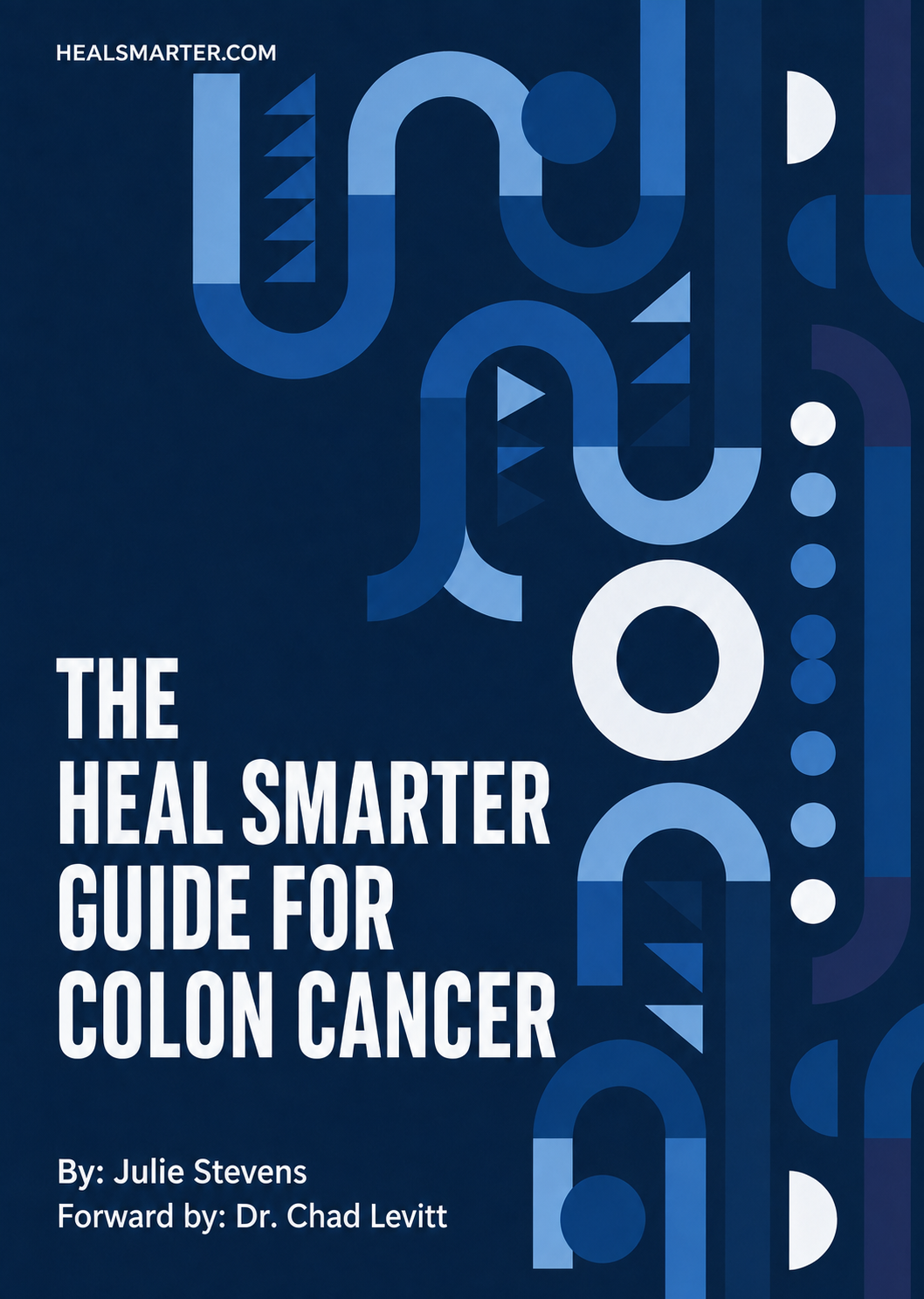
The Heal Smarter Guide for Colon Cancer
If this page helped clarify what the numbers mean, the Guide is the next step: an educational resource built to help patients and caregivers understand the terminology, testing, and decisions that come with a colon cancer diagnosis, and to walk into appointments with better questions.
It was written by Julie Stevens, a Stage 4 colon cancer survivor, with a foreword by Dr. Chad Levitt, a practicing oncologist, and Heal Smarter describes it as clinically reviewed. It works chapter by chapter, with a companion video for each. It does not diagnose, and it does not tell anyone which treatment to choose.
Colon Cancer Survival: Frequently Asked Questions
What is the survival rate for colon cancer?
The National Cancer Institute's SEER program reports 5-year relative survival for colorectal cancer — colon and rectal cancer counted together — as 91.3% when the cancer is localized, 75.2% when it is regional, and 16.9% when it is distant, based on SEER 21 data for people diagnosed between 2016 and 2022. Extent of disease at diagnosis is the single strongest driver of these differences, and no published rate describes what will happen to one specific person.
What does a five-year relative survival rate mean?
Relative survival compares people diagnosed with a cancer to people in the general population of similar age and sex. A 5-year relative survival of 75% means the group diagnosed with that cancer was about 75% as likely to still be alive five years later as a comparable group without it. It removes deaths from unrelated causes, so it is an estimate of the effect of the cancer itself rather than a life expectancy.
What is the survival rate for Stage IV colon cancer?
Stage IV generally corresponds to what SEER calls distant disease, where cancer has spread to organs or lymph nodes far from the colon. SEER reports 5-year relative survival of 16.9% for distant colorectal cancer diagnosed between 2016 and 2022. That figure is an average across a very mixed group of people, from those with a single small liver metastasis to those with widespread disease, so individual situations vary widely.
Can people live long-term with metastatic colon cancer?
Yes. Published survival statistics are averages, and every average contains people who lived far longer than the middle of the range. Outcomes in metastatic disease depend on factors such as where and how extensively the cancer has spread, whether local treatments to the metastatic sites are an option, the molecular characteristics of the tumor, and how the cancer responds to treatment. What is realistic in an individual case is a conversation for that person's oncology team.
Why do colon cancer survival statistics vary between sources?
Different organizations use different registries, different date ranges, and different staging systems. SEER groups cancers as localized, regional, or distant, while clinical staging uses Stage I through Stage IV, and some sources report colon cancer separately while others combine colon and rectal cancer as colorectal. When comparing numbers, check which population, which years, and which grouping the figure describes.
Does age affect colon cancer survival?
Age is one of several factors clinicians consider, and it interacts with others such as overall health, other medical conditions, and which treatments a person can tolerate. Relative survival is already adjusted for the background mortality of the general population at a given age, which is one reason it is used for comparisons. Age alone does not determine an individual outcome.
Are newer treatments reflected in current survival statistics?
Not fully. A 5-year survival figure covering diagnoses from 2016 to 2022 reflects the testing and treatment those patients received at that time. Treatment approaches, molecular testing, and supportive care continue to change, so recently reported figures always describe the recent past rather than the present. This is worth raising directly with an oncology team when discussing what statistics mean today.
Can survival statistics predict how long one person will live?
No. Population statistics describe what happened to large groups of people who were diagnosed years ago. They are useful for understanding general patterns and for framing questions, but they cannot account for an individual's tumor biology, treatment response, other health conditions, or the options available now. A clinician who knows the full clinical picture is the only person positioned to discuss individual prognosis.
Keep going — there is more than one useful next step.
Some people want the full Guide. Some want to read about Julie's experience first. Some want to talk it through with someone. All three are here.
Sources & further reading
Every statistic on this page links to the organization that published it. If a figure below has been updated since this page was last reviewed, the source is authoritative — not this page.
- National Cancer Institute — SEER Cancer Stat Facts: Colorectal Cancer
Source of the 5-year relative survival figures by extent of disease used on this page. SEER reports colon and rectal cancer together as colorectal cancer.
- SEER*Explorer — interactive survival statistics
Lets you filter survival data by cancer site, including colon separately from rectum, and by stage, age, sex, and year of diagnosis.
- National Cancer Institute — Colon Cancer Treatment (PDQ®), Patient Version
NCI's patient-facing overview of colon cancer stages and treatment approaches.
- American Cancer Society — Colorectal Cancer
Patient-focused explanations of staging, testing, treatment, and survivorship.
- NCCN Guidelines for Patients — Colon Cancer
Free patient versions of the treatment guidelines many oncology teams work from.
How this page was put together

- Published by
- Heal Smarter
- Patient perspective / contributor
- Julie Stevens — Stage 4 colon cancer survivor, patient advocate, author, speaker, and founder of Heal Smarter.
- Medical information
- Statistics and clinical definitions on this page are drawn from established cancer authorities, including the National Cancer Institute's SEER program. Julie Stevens contributes the patient-survivor perspective; lived experience is not medical expertise.
- Purpose
- Educational. This page explains terminology and published statistics so patients and families can ask better questions.
- Published / last updated
- Prototype — publication and last-updated dates to be set in WordPress
- Sources
- See sources & further reading
Medical information disclaimer
Heal Smarter provides educational information and patient-navigation resources and does not provide diagnosis, treatment recommendations, or individualized medical advice. Nothing on this page is a substitute for care from a qualified clinician. Patients should discuss medical decisions, test results, and treatment options with their own healthcare team.